
Autumn is not only the season when the garden slows down. For some seeds, it is even one of the best times to sow.
We often think that sowing is reserved for spring, between March and May. Yet some seeds can be sown perfectly well as early as autumn.
While some will germinate before winter and spend the winter months as young plants, others will remain quietly in the soil until spring. And, for some species, the cold and moisture of winter are even part of the natural germination process.
So, among aromatic, medicinal, dye and garden-useful plants, which ones are really worth sowing before winter?
Which seeds should be sown before winter?
Seeds to sow fresh
Some seeds do not keep well over time. For these, autumn can be interesting simply because you have freshly harvested seeds on hand.
This is particularly the case with Apiaceae, such as sweet cicely, alpine fennel, and angelicas (garden angelica, wild angelica), whose germination capacity decreases fairly quickly after harvest. This is also why we only offer them for a few months following harvest: we prefer to work with fresh seeds.
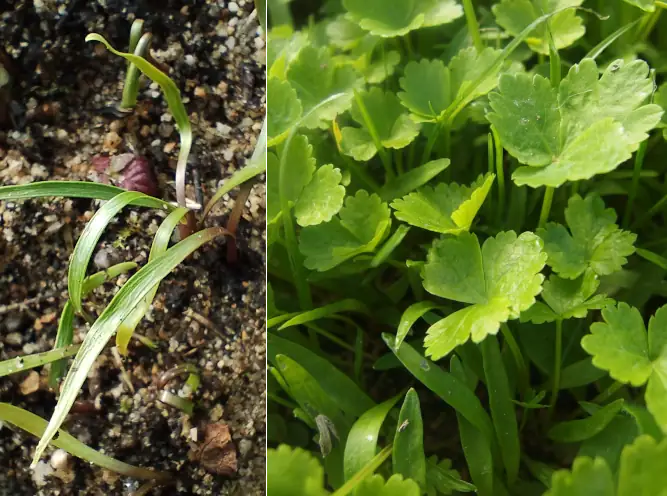
The advantage of autumn sowing in this case is simple: sowing seeds that are difficult to store rather than trying to keep them in storage for several months. Sometimes the soil is the best place to store them.
Perennials: let winter do its work
Autumn is very well suited to certain perennial plants.
Why?
Because some seeds need a cold and moist period before they can germinate. In a way, winter acts as a natural awakening. Thus, hogweed or musk mallow seeds remain in the soil for several weeks to several months. Then, when conditions become favorable again in spring, they can begin to germinate.
But it can happen that even when the conditions (water, T°C, light, ...) are right for good emergence, unfavorable factors within the seeds themselves (linked to the seed coats or the embryo) can prevent germination. This is what is called dormancy. These dormancy phenomena are characteristic of the Rosaceae family (lady's mantle), but are found in many other species (black elder). For example, yellow gentian needs a prolonged period of continuous cold and moisture (2-3°C) for 5-6 months, whereas bistort needs temperature variations (warm/cold) to break its dormancy.
There is therefore no need to worry if nothing emerges before winter.
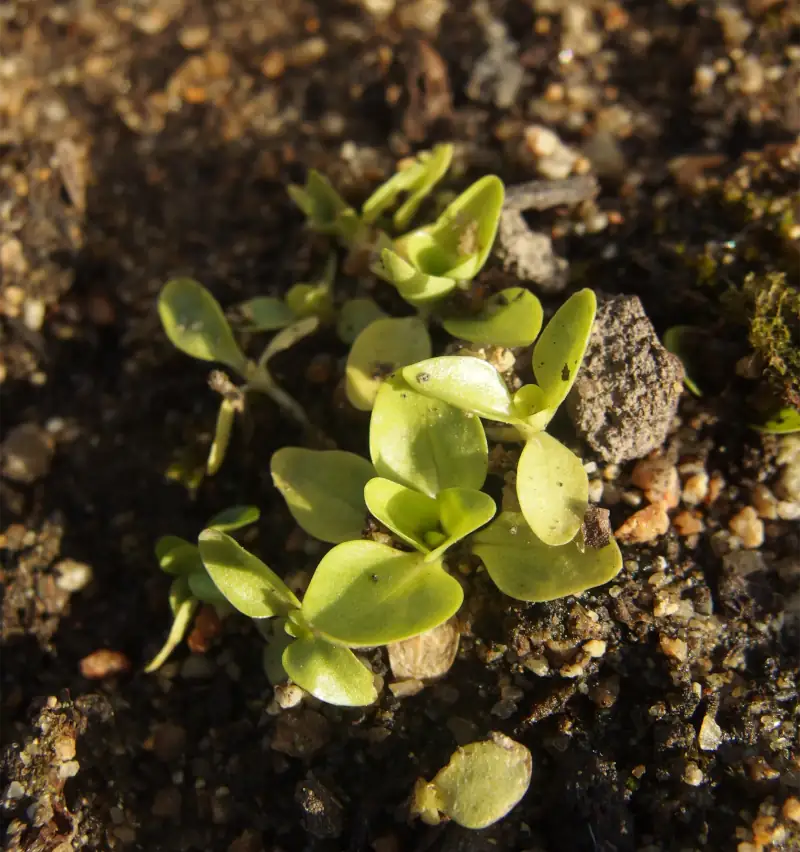
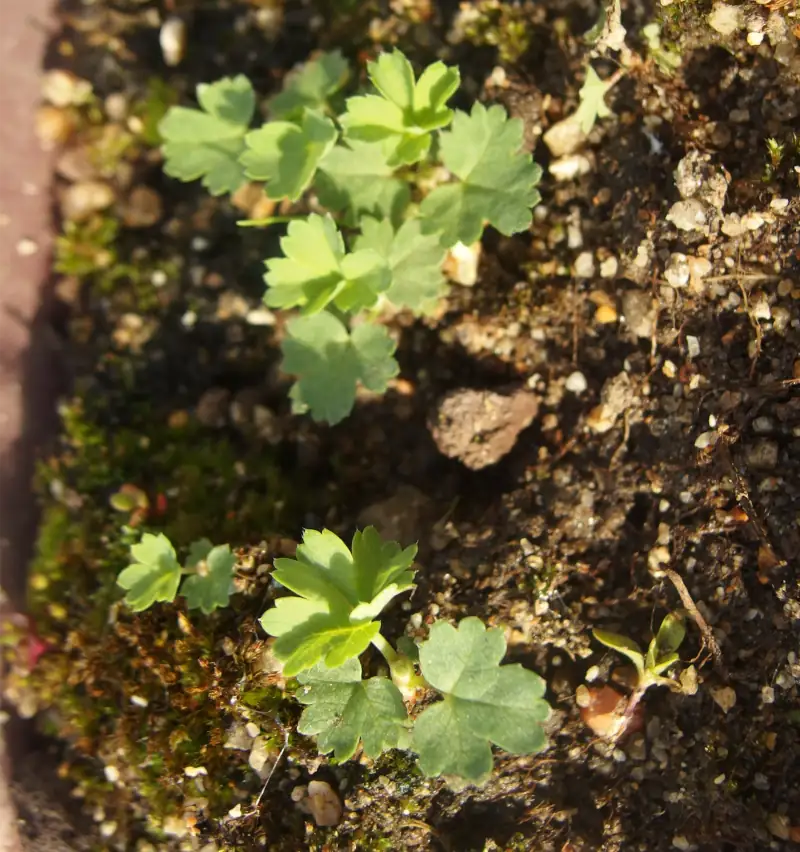
Because other species will germinate quickly while favorable conditions are still present, then survive the winter months as young plants.
Among the plants that can be considered for sowing at this time of year are echinacea, hyssop, lavender, common sage, vervain or meadowsweet.
Biennials: getting a head start
Biennial plants generally develop their leaves, often in the form of a rosette close to the ground, during the first year, and then flower the following year.
Autumn sowing can therefore make it possible to "gain time".
This is particularly the case with dyer's woad, dyer's mignonette, honesty, and teasels (cultivated teasel, wild teasel).
Some annuals, depending on the region
In regions where temperatures only exceptionally fall below -5°C, and/or in dry regions, it may be wise to sow annual plants in autumn. For example, poppy and corn poppy, cornflower, and calendula.
But autumn sowing works mainly when the species and climate are suitable for it.
In a garden exposed to very cold winters, young plants may be more vulnerable, especially if the sowing is too late. In this case, spring sowing remains a safer option.
Here in Creuse, where winter can change the situation, with temperatures regularly reaching -15 °C and prolonged cold, wet conditions, we are not yet considering sowing our annuals directly in the ground to "get a head start".
When and how should you sow in autumn?
The right time depends on the plant, your region and the weather. In a temperate climate, September and October are a good time for autumn sowing.
Directly in the ground?
For species that tolerate direct sowing well, sowing directly in the ground is often the simplest solution. This is what we would favor for poppies, corn poppies or hardy annuals. You should then ask yourself the same questions as for spring sowing directly in the ground: Is the soil still easy enough to work? Is it moist without being waterlogged? Are temperatures beginning to fall? Does the weather forecast indicate an exceptionally mild period or, on the contrary, a sudden cold spell?
The most important thing is to have:
- clean, well-prepared soil;
- soil that properly drains excess water: drainage is essential;
- the correct sowing depth;
- a location that can easily be identified in spring.
Or in a seed tray?
A pot or seed tray can, however, be practical for seeds that you want to monitor or keep under shelter (greenhouse or cold frame).
You can also place the container outdoors, exposed to winter weather (rain, snow, sleet, freezing/thawing) in order to simulate what happens in nature. This is called stratified sowing. From the beginning of March, you will need to start watering, depending on the weather, to prevent the potting soil from drying out.
In any case, remember to label your sowings! In spring, it can sometimes be difficult to tell whether the seedling that has just emerged from the soil is the plant you sowed a few months earlier... or an unwanted weed.
So, what should you sow this autumn?
- If you have fresh seeds, think in particular of sweet cicely and angelica.
- For certain perennials, autumn sowing allows winter to naturally play its role.
- For biennials, such as dyer's woad and honesty, you can get a head start on the following season. And when it comes to hardy annuals, opium poppy, corn poppy, cornflower and calendula are good candidates when the climate is suitable.
In reality, autumn sowing is not a matter of following a calendar at all costs. It is above all a matter of choosing the right seeds at the right time.
After fifteen years of sowing, observing and selecting our plants under our conditions, we have mainly learned one thing: the garden does not read books! And every year we continue to learn and experiment because there is the plant, there is the climate, there is the soil or growing medium, and there is also the year.
Share your experience or ask a question.
Add your comment